Advertisements
Imagine opening your camera and seeing every leaf, flower, or bark reveal its identity in a digital whisper: your phone becomes a scientific magnifying glass and a passport to a green world full of surprising stories waiting to be told.
Take the next step and open any of the free apps to identify plants that you already know: focus, tap, and annotate; your own digital herbarium starts today, and every walk will become a source of discovery, learning, and an eternally shareable memory.
Advertisements
Green perspective for your daily routine
Nature is no longer a closed book; the pages unfold when you take out your phone and focus on a single bud. These tools turn every commute, school trip, or weekend getaway into a living laboratory where you can learn botany in a practical and fun way.
In addition, the free apps to identify plants They stimulate constant curiosity: by recording discoveries with location, your phone creates a personal biodiversity map. This visual archive grows with you and allows you to compare seasons, climates, and microhabitats, fostering a more conscious relationship with the environment.
Advertisements
See also
- Learn to dance Zumba at home with free apps
- Discover the power of tea to restore your energy
- Tea for vitality
- Recover your vitality with this powerful natural tea
- Make your phone go faster
How to use apps to enrich walks and trips
Set a simple goal before you head out: identify at least five new species. Activate geolocation so the app records the exact spot you observed; you can then review routes and plan future excursions following areas with greater diversity. In an urban park, focus first on large trees and then move down to the grass; the vertical variety is surprising. During a trip, download local data packages if the app offers them. This way, it will work offline and you won't be left without a response in remote areas. Bring external batteries: the camera and GPS consume energy quickly when you visit nature reserves. Photograph the plant from different angles (leaf, flower, fruit, bark) to increase the algorithm's accuracy and keep a complete record for future reference. Finally, share your best discoveries on social media or botanical forums; other hikers will give you tips on how to find rare species and enrich your collection. With practice, free apps to identify plants They will transform a normal walk into an immersive experience, where each step reveals a story written in chlorophyll.
Common mistakes when blindly trusting apps
Initial enthusiasm may lead you to accept the first suggestion that appears on the screen, but even the best artificial intelligence makes mistakes. Poor lighting or a confusing background lead to misidentifications, and incorrect information can be dangerous if the plant is toxic. Another common mistake is not cross-checking data with additional sources: free apps to identify plants They offer links and match percentages; if your accuracy is low, repeat the photo or look for key features in regional guides. Avoid cropping the image too much: context—stem, soil, surrounding leaves—helps the algorithm. Relying solely on flowering phase is also risky; many species vary significantly between spring and fall. Finally, don't forget local regulations: some protected areas prohibit collecting samples or uploading precise locations of endangered species. Maintaining environmental ethics is just as important as getting the scientific name right.
Practical tips to become an amateur expert
Schedule weekly sessions to review your gallery and classify observations; this way you internalize morphological features and remember names. Accept the gamification challenges that apps like Seek propose: earning badges improves your motivation and pushes you to explore new ecosystems. Join citizen science communities on PlantNet or iNaturalist; you'll receive feedback from botanists and contribute valuable data for conservation. Create thematic albums—medicinal plants, urban trees, wildflowers—which facilitates comparative study. Learn to use magnifying glasses and macro lenses attached to your phone to capture details of stamens and veins; the precision of the free apps to identify plants It increases significantly with sharp images. Finally, prepare short talks for friends or family: teaching reinforces your own knowledge and increases interest in local biodiversity.
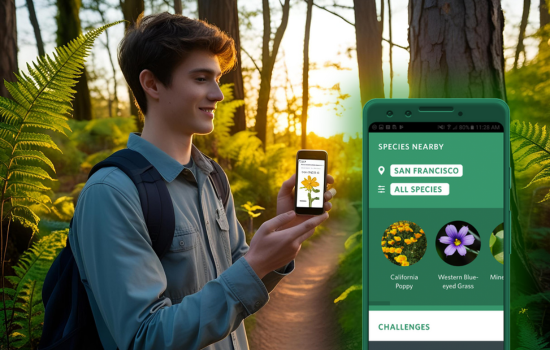
Nature breathes silently around you, waiting for you to tune your senses to listen. When you look at a bush and discover its name, you stop seeing it as mere decoration and begin to recognize it as a living being with history, ecological function, and cultural value. This shift in perspective connects you with seasonal cycles: you understand why certain flowers attract butterflies in March and how fallen leaves nourish the soil in June. With each identification, you practice mindfulness; your walk ceases to be routine and becomes a dialogue between technology and the environment. free apps to identify plants They are the key to access, but the door truly opens when you decide to observe patiently, record rigorously, and share with empathy. Thus, your digital herbarium will not only be a collection of photos, but a personal testimony that a greener, more informed, and more respectful life is possible. And it all begins—and continues—with the simple action of focusing and touching the screen, today, tomorrow, and always.