Advertisements
In today's market, the application performance It's crucial for success. Have you ever wondered how you can ensure your app runs smoothly and delivers an exceptional user experience?


The performance testing tools are essential to identify problems before they affect your users. By using these tools, you can optimize your applications and achieve better business results.
In this article, we'll explore how the right tools can help you improve your application performance and transform the end-user experience.
Advertisements
The Impact of Performance on Application Success
The speed and efficiency of your web applications can make or break your online business. In a digital environment where competition is fierce, ensure optimal performance is crucial to keeping users engaged and satisfied.
Why performance is crucial to the user experience
A poor performance This can lead to a poor user experience, causing frustration and app abandonment. On the other hand, a fast and efficient app improves user satisfaction, increasing the chances of retention and conversion.
Advertisements
User experience is directly influenced by the loading speed and responsiveness of an app. A loading delay can result in a significant decrease in conversion rates.
Statistics on the impact of performance on conversion
Statistics support the importance of conversion performance. For example, one study revealed that every second of loading delay can reduce conversion rates by 71% to 30%. Furthermore, the global software testing market is estimated to have exceeded 1% to 40% in 2019 and continues to grow rapidly.
- We'll examine how each second of loading delay affects conversion rates.
- We will analyze cases of companies that have suffered losses due to performance problems.
- We'll explore the relationship between page load speed and key metrics like dwell time and bounce rates.
When performing performance tests, you can identify and resolve issues before they affect your users. This not only improves the user experience but also contributes to the long-term success of your app.
What Are Performance Tests and Their Main Objectives?
Performance testing is essential for evaluating an application's performance under various conditions. These tests help determine how an application performs in terms of speed, response time, scalability, resource usage, and stability under a given workload.
The main goal of performance testing is to identify all of an application's performance bottlenecks. By doing so, developers can optimize the application to improve the user experience and ensure it can handle the expected traffic and load.
Definition and scope of performance testing
Performance testing is a type of software testing that focuses on evaluating an application's performance under different scenarios. This includes assessing how the application responds to different workloads, identifying potential performance issues, and determining the application's scalability.
The scope of performance testing can vary depending on the application's needs and testing objectives. However, in general, performance testing seeks to assess an application's ability to handle a large number of concurrent users, process large amounts of data, and maintain optimal performance under various conditions.

Key metrics you should monitor
When performing performance testing, there are several key metrics you should monitor to properly assess your application's performance. Some of these metrics include:
- Response times: The time it takes for the application to respond to a user request.
- Error rates: The number of errors that occur during the execution of the application.
- Throughput: The amount of work the application can perform in a given period.
- Resource Utilization: The amount of system resources the application uses, such as CPU, memory, and disk.
By monitoring these metrics in real time, you can identify specific issues in your application and take steps to optimize its performance. Additionally, setting appropriate thresholds for each metric based on the type of application and user expectations is crucial to ensuring an optimal user experience.
6 Types of Fundamental Performance Tests
Understanding the different types of performance tests is essential for optimizing your application's performance. These tests allow you to evaluate how your application performs under different conditions, identifying potential issues before they affect users.
Load testing
The load testing They evaluate how your application behaves under high demand. This helps you understand how it handles a high number of concurrent users and identify potential bottlenecks. By performing load tests, you can ensure your application can handle the expected traffic without compromising performance.
Endurance tests
The endurance tests These tests are designed to evaluate your application's performance over time. This involves subjecting the application to constant load for an extended period to detect potential performance issues that only become apparent over time.
Stress tests
The stress tests They push your application to its limits, subjecting it to extreme conditions to see how it responds. This allows you to identify your application's breaking point and take steps to improve its robustness and resilience.
Peak tests
The spike tests Simulate sudden increases in traffic or workload to evaluate how your application responds. This is crucial for applications that experience unexpected traffic spikes, ensuring they can handle these increases without crashing.
Volume tests
The volume tests These tests involve processing large amounts of data to evaluate how this affects your application's performance. By performing these tests, you can identify potential data-handling issues and optimize your application to work efficiently with large volumes of data.
Scalability testing
The scalability tests Measures a software's effectiveness at handling an increasing amount of workload. By gradually adding data volume or users while monitoring the software's performance, you can evaluate its ability to grow and adapt to changing demands. This allows you to plan the infrastructure needed to support future growth and ensure your application can scale effectively.
By implementing these six types of performance tests, you can ensure that your application is robust, scalable, and capable of delivering an optimal user experience under a variety of conditions.
Strategic Benefits of Performance Testing
Performance testing offers multiple strategic benefits that can significantly improve the efficiency and success of your applications. By proactively identifying and resolving performance issues, you can avoid significant financial losses and improve user satisfaction.
Prevention of economic losses due to failures
Performance tests help identify inefficiencies in the use of resources such as CPU, memory, and bandwidth. By detecting these problems early, you can avoid financial losses caused by system failures or poor user experience. This allows you to take corrective action before problems affect your customers.
Improving user satisfaction and retention
An application that works efficiently and quickly significantly improves the user satisfactionPerformance testing ensures that your app meets user expectations in terms of speed and fluidity. This is crucial to keeping your users engaged and increasing retention.
Optimization of resources and operating costs
When performing performance tests, you can optimize infrastructure of your application based on real performance data. This helps you avoid both oversizing and undersizing resources, resulting in reduced long-term operating costs. Additionally, early detection of bottlenecks allows for a more efficient allocation of resources hardware.
In short, performance testing is critical to the success of your applications. Not only does it help prevent financial losses and improve user satisfaction, but it also allows you to optimize resources and reduce operating costs. By integrating performance testing into your development strategy, you can ensure your applications are fast, efficient, and capable of handling expected demands.
The Performance Testing Process Step by Step
A well-designed performance testing process allows you to identify and resolve performance issues effectively. Below are the key steps for conducting structured performance testing.
Identification of Requirements and Objectives
The first step is to identify the requirements and objectives of your performance tests. This involves defining what you want to achieve with the tests and what metrics you will use to measure success. Understanding your users' needs and the characteristics of your application is essential to designing relevant tests.
Test Design and Planning
Once you're clear on your objectives, it's time to design and plan your tests. This includes selecting the right tools, defining test scenarios, and determining the workload to be simulated. Good test design will help you achieve accurate and relevant results.
Environment Configuration and Execution
Test environment setup is crucial for obtaining reliable results. Make sure the environment is as similar as possible to the production environment. Then, run the tests as planned and be sure to monitor the results in real time.
Analysis of Results and Implementation of Improvements
Once you have the test results, analyze them to identify bottlenecks and areas for improvement. Prioritize optimizations based on their potential impact and implementation complexity. Implement the necessary improvements and retest to verify their effectiveness.
By following these steps, you will be able to perform performance tests effective and improve the performance of your applications. Remember that the testing process is iterative, so you should keep testing and improving until you achieve the desired results.
| Passed | Description | Importance |
|---|---|---|
| 1. Identification of Requirements and Objectives | Define what you want to achieve with the tests and what metrics you will use. | High |
| 2. Test Design and Planning | Select tools, define test scenarios, and determine the workload. | High |
| 3. Environment Configuration and Execution | Ensure the environment is similar to production and run tests. | Average |
| 4. Analysis of Results and Implementation of Improvements | Analyze results, identify areas for improvement, and implement changes. | High |
Performance-Boosting Teas App: Selection Criteria
When selecting a performance testing tool, it's crucial to consider several key factors that can significantly impact the success of your application. The right tool will not only help you identify performance issues but also allow you to optimize your application for a better user experience.
Essential features in a testing tool
A performance testing tool must have certain essential features to be effective. These include the ability to simulate realistic user loads, monitor system behavior under pressure, and analyze the results to make informed decisions. User load simulation allows you to evaluate how your application handles increasing traffic and identify potential breaking points.
- Simulation of realistic user loads
- Monitoring system behavior
- Analysis of results for decision-making
Budget and resource considerations
Budget and available resources are critical factors when selecting a performance testing tool. You should consider not only the initial cost of the tool, but also the implementation, maintenance, and training costs. It's important to evaluate whether the tool integrates well with your existing tools and processes.
| Factor | Description | Importance |
|---|---|---|
| Cost | Initial cost and maintenance costs | High |
| Resources | Hardware and software requirements | Average |
| Training | Level of training required for effective use | High |
Compatibility with your technology stack
Compatibility with your technology stack is critical to ensuring the performance testing tool integrates seamlessly with your existing systems. You should evaluate whether the tool supports the specific protocols, frameworks, and technologies you use in your development. Compatibility allows you to test complex architectures effectively.
The key to successful performance testing is choosing a tool that fits your specific needs and integrates well with your development environment.

In short, when selecting a performance testing tool, you should carefully consider the essential features, budget and resources, as well as compatibility with your technology stack. By doing so, you can significantly improve your application's performance and deliver a better experience to your users.
Apache JMeter: The Most Popular Open Source Solution
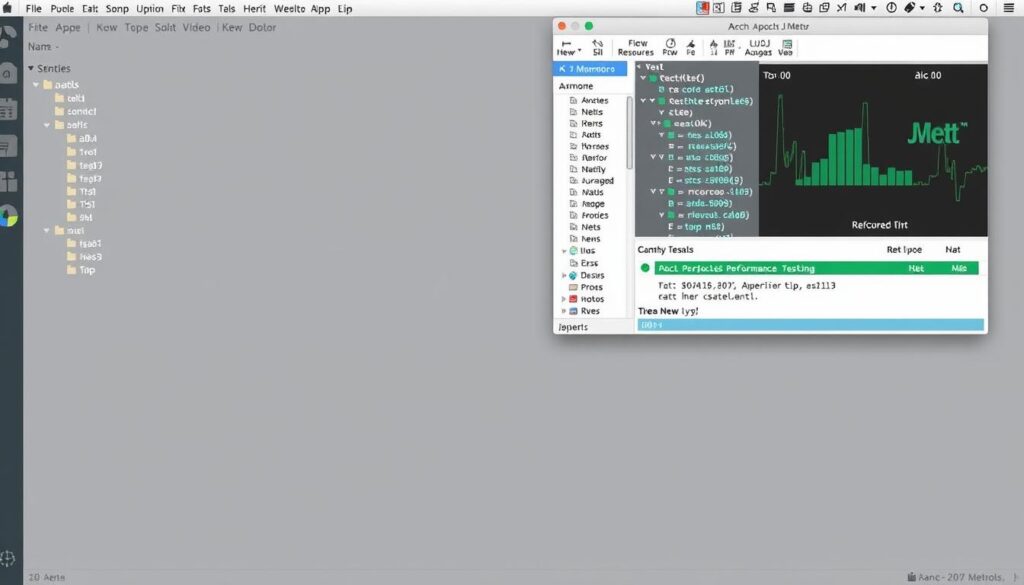
In the field of performance testing, Apache JMeter stands out as a leading open source solution.
Overview
Apache JMeter is a widely used performance testing tool for its ability to simulate heavy workloads on web applications.
Main Features
Its main features include:
- Ability to perform load testing and stress in various applications.
- Support for multiple protocols, including HTTP, FTP, and TCP.
- Intuitive user interface that makes it easy to create and configure tests.
Advantages
The advantages of using Apache JMeter include:
- It is from open source, which means it's free and has an active community.
- It can simulate a massive number of users attendees.
- It is highly customizable and extensible through plugins.
Limitations
Despite its advantages, Apache JMeter has some limitations:
- It involves a steep learning curve for new users.
- It is not suitable for extreme and large-scale performance testing scenarios due to its limitations in handling massive numbers of concurrent users.
To overcome these limitations, advanced configurations or complementary tools can be used.
LoadRunner: Enterprise-Level Load Testing

Overview
LoadRunner is an enterprise-grade load testing tool that enables organizations to evaluate the performance of their applications under extreme conditions. With its ability to simulate hundreds or thousands of concurrent virtual users, LoadRunner provides a comprehensive view of application performance.
Main features
Notable features of LoadRunner include its ability to perform performance tests comprehensive, simulating realistic workloads and enabling the identification of performance bottlenecks.
In addition, LoadRunner makes it easy to load testing in different environments, including web, mobile, and cloud applications, making it a versatile tool for enterprise testing needs.
Advantages
One of the main advantages of LoadRunner is its ability to provide accurate and reliable results in performance testing, helping organizations make informed decisions about optimizing their applications.
Additionally, its compatibility with a wide range of technologies and protocols makes it suitable for a variety of IT environments.
Limitations
Despite its advantages, LoadRunner has some limitations. These include its licensing model and high cost compared to some open source alternatives.
Additionally, the learning curve for new users can be steep, requiring investment in training and support.
When considering LoadRunner adoption, it's crucial to evaluate these limitations in the context of your organization's specific needs.
Gatling: High Performance for Developers

Overview
Gatling has established itself as one of the preferred tools for developers to perform performance tests Due to its high performance and ease of use, this open-source tool allows development and QA teams to efficiently perform load and stress testing.
Main features
Among Gatling's most notable features is its ability to integrate with data visualization tools like Grafana, InfluxDB, and StatsD, making it easier to analyze test results. Additionally, its compatibility with Jenkins allows for seamless integration into CI/CD pipelines.
Advantages
One of the main advantages of Gatling is its ease of use, despite requiring Scala knowledge for advanced scripting. Furthermore, its open-source nature reduces the costs associated with testing tools.
Limitations
Although Gatling offers many advantages, it also has some limitations. These include:
- The learning curve for teams with no Scala experience.
- The graphical user interface could be more intuitive and visual.
- Complex scenarios may require additional tools.
Despite these limitations, Gatling remains a powerful tool for load testing and performance. Its ability to integrate with other tools and its open-source nature make it an attractive option for many development teams.
K6: The Modern Performance Testing Tool
Overview
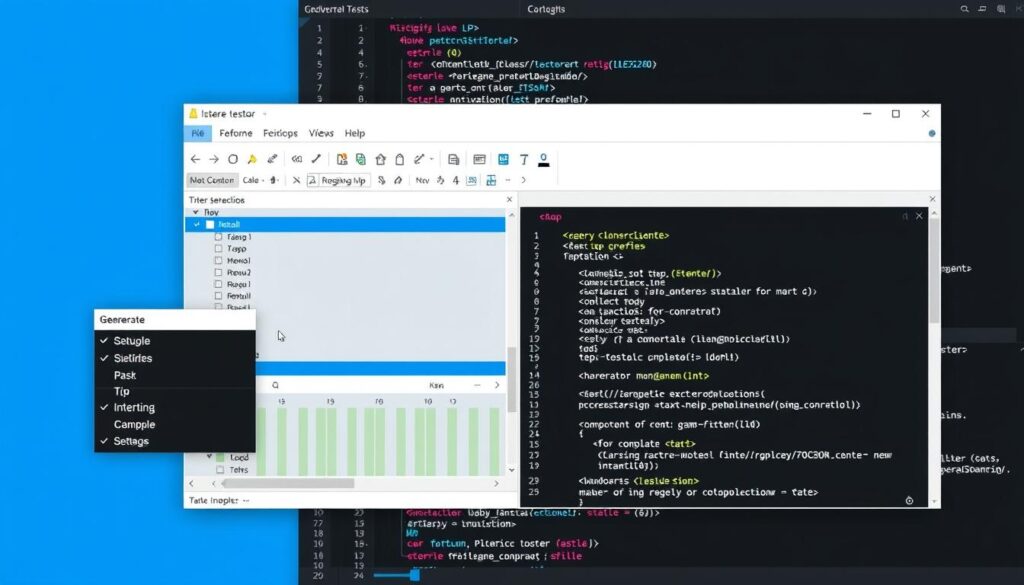
K6 is a performance testing tool developed by Grafana Labs, designed to be modern, flexible, and easy to use. It enables developers and QA teams to perform performance testing efficiently.
Main features
Among its key features are its command-line interface (CLI) and developer-friendly APIs, which facilitate programmatic control. Additionally, K6 uses scripts written in JavaScript with ES2015/ES6 syntax, making it accessible to many developers.
Another notable feature is its ability to perform load and stress testing with a focus on automation and continuous integration.
Advantages
One of K6's advantages is its ability to simulate large numbers of virtual users, allowing application performance to be evaluated under realistic conditions. Furthermore, its open-source nature and active community contribute to its constant improvement.
For more information on how K6 can improve your performance testing, we recommend visiting our article on preparation for real traffic with Grafana.
Limitations
While K6 offers many advantages, it also has some limitations. For example, its graphical user interface is more limited compared to some other tools, which could be a challenge for those who prefer visual interfaces.
- We'll discuss the most significant limitations of K6 that you should consider before adopting it.
- We will explore its restrictions in terms of supported protocols compared to more mature tools.
- We will understand the limitations of its graphical user interface.
- We will explore the challenges associated with simulating a very large number of virtual users.
Locust: Defined Load Testing with Python

With Locust, you can perform load and performance testing efficiently, leveraging the power of Python. Locust is an open-source tool that stands out for its flexibility and ability to simulate large numbers of concurrent users.
Overview
Locust offers an easy way to define load tests using Python. This allows you to customize your tests to your application's specific needs.
Main features
Locust's most notable features include:
- Data-Driven Testing: Customize and parameterize test data for comprehensive testing.
- Real-Time Insights: Get real-time statistics on response times, request rates, and failures.
- Active Open Source Community: Locust has an active community that offers support and extensibility options.
- Scalability Testing: Ideal for testing the scalability of your application by adjusting the number of virtual users under various load conditions.
Advantages
Locust offers several advantages, including its ease of use and the ability to programmatically define load tests. This makes it easy to integrate performance testing into your development cycle.
Limitations
Some of Locust's limitations include:
- Restrictions in terms of natively supported protocols, especially for non-HTTP protocols such as SOAP/REST.
- Challenges related to its performance compared to tools implemented in lower-level languages.
- Limitations in its analysis and reporting capabilities compared to more comprehensive solutions.
In short, Locust is a powerful tool for performing performance tests and load testing in web applications. Although it has some limitations, its flexibility and active community make it an excellent choice for many development teams.
Kinsta APM: Dedicated Monitoring for WordPress
Overview
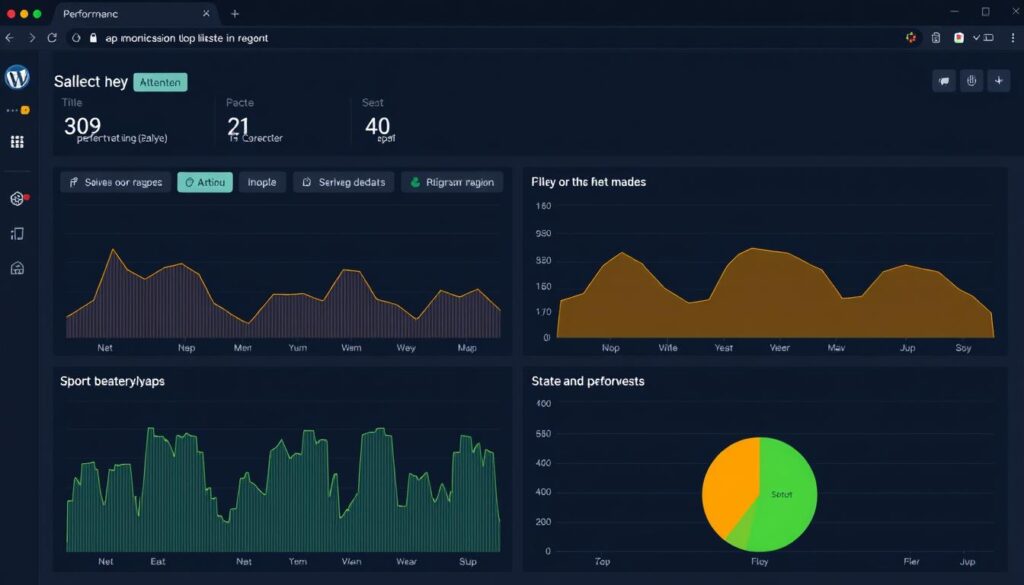
For WordPress users hosted at Kinsta, Kinsta APM offers a performance monitoring solution. This tool is designed to help website owners understand and improve their sites' performance.
Main features
Kinsta APM provides detailed insight into the performance of WordPress websites. Its features include transaction monitoring, bottleneck identification, and database query analysis.
Advantages
One of the main advantages of Kinsta APM is that it is Free for all websites hosted at Kinsta, regardless of the plan chosen. In addition, it offers a detailed monitoring that helps identify and troubleshoot performance issues.
Limitations
While Kinsta APM is a powerful tool, it does have some limitations. For example, it is Restricted to sites hosted at Kinsta. Furthermore, it is primarily a monitoring tool and does not perform active load testing.
- We'll discuss the most significant limitations of Kinsta APM that you should consider before adopting it.
- We'll explore your restriction to sites hosted exclusively on the Kinsta platform.
- We will understand its limitations in terms of active load testing, as it is primarily a monitoring tool.
- We will discover the scenarios where other more general tools might be necessary as a complement.
In short, Kinsta APM is a valuable tool for WordPress users hosted at Kinsta. It offers detailed performance monitoring and is free for all Kinsta-hosted websites. However, it's important to consider its limitations before adopting it.
WebLOAD: Complete Solution for Web Applications

Overview
In the field of web application performance testing, WebLOAD emerges as a comprehensive solution. It offers a wide range of tools for performing load testing and performance effectively.
Main features
WebLOAD stands out for its ability to handle large-scale testing, allowing development and QA teams to evaluate the performance of their applications under various load conditions.
Some of its key features include:
- Simulation of realistic users
- Detailed analysis of results
- Integration with various development tools
Advantages
One of the main advantages of WebLOAD is its ability to provide detailed information about the performance of web applications under different load scenarios.
In addition, his load testing tool It allows you to identify bottlenecks and areas for improvement, which is crucial to optimizing the user experience.
Limitations
While WebLOAD offers numerous advantages, it also has some limitations that you should consider.
- It can be complex for new users due to its wide range of features.
- Cost can be a limiting factor for small and medium-sized businesses.
- May require additional resources for very complex configurations.
It is important to evaluate these limitations in the context of your specific needs and consider alternatives if necessary.
To learn more about WebLOAD and how it can benefit your organization, you can contact their customer support team via phone, fax, or contact form. Additionally, a free trial option is available for up to 50 users.
LoadNinja: Testing Without Complex Scripts

LoadNinja excels at simplifying performance testing without the need for complex scripts. This innovative tool allows testing teams to perform comprehensive performance analyses without requiring advanced scripting knowledge.
Overview
LoadNinja is designed to simplify and accelerate performance testing. It analyzes software performance data such as pass times, asynchronous calls, resources processed, and navigation times in your web interface, and diagnoses problems using a machine learning assistant.
Main features
Key features of LoadNinja include:
- Performs continuous software performance testing.
- Move faster with test quality and coverage.
- Automate testing without configuration or maintenance.
Advantages
The advantages of using LoadNinja include:
- Simplifying performance testing.
- Reduction in the time and effort required for testing.
- Improved detection of performance issues.
Limitations
Some of the LoadNinja limitations you should consider are:
- Restrictions in terms of advanced customization compared to script-based tools.
- Challenges related to your pricing model for large-scale testing with many virtual users.
- Potential limitations for non-web-based protocols or applications with very specific architectures.
In short, LoadNinja offers an effective solution for simplifying performance testing without the complexity of scripts. Although it has some limitations, its benefits in terms of test simplification and automation make it a valuable tool for testing teams.
Practical Implementation: Real Use Cases
Performance testing is an integral part of web application and API optimization, and its practical implementation can vary depending on the use case. Below, we'll explore how different industries and scenarios benefit from this testing.
Performance Testing for E-Commerce
In e-commerce, performance testing is crucial for handling traffic spikes during flash sales or holidays. By simulating extreme load conditions, you can identify and resolve issues. performance bottlenecks before they affect your customers.
For example, an online store can use performance testing tools to simulate a sudden increase in traffic and ensure its website can handle it without compromising the user experience.
Enterprise Application Optimization
Enterprise applications also benefit significantly from performance testing. By ensuring that these applications can handle the expected workload, businesses can ensure optimal performance and minimize downtime.
An example might be a company using a human resource management application that performs performance testing to ensure the application can handle the expected number of concurrent users without degrading performance.
Preparing for high-traffic events
High-traffic events, such as product launches or viral campaigns, require special preparation. Performance testing helps companies prepare for these events by simulating expected traffic and adjusting their infrastructure as needed.
For example, a company planning to launch a new product may conduct performance tests on its website and web applications API to ensure they can handle the additional traffic without problems.
| Use Case | Benefit of Performance Testing |
|---|---|
| Electronic Commerce | Handling traffic spikes during flash sales |
| Business Applications | Ensuring optimal performance and minimizing downtime |
| High Traffic Events | Preparing for product launches or viral campaigns |
By implementing performance testing in these scenarios, businesses can ensure their web applications and APIs are prepared for any situation, resulting in a better user experience and a optimal performance of the applications.
Conclusion
After a thorough analysis of the tools of performance tests, it is clear that early integration of these tools into the development cycle is critical. By evaluating the different options available, we can identify the best testing tools for our specific needs.
The tools analyzed, such as Apache JMeter, LoadRunner, and Gatling, offer a variety of features to suit different contexts and needs. select the right tool, you can significantly improve the performance of your web applications and APIs.
It is important to highlight that the performance tests Not only do they help prevent financial losses due to failures, but they also improve user satisfaction and retention. By integrating these tests into your development cycle, you can optimize resources and operating costs.
Looking to the future, it is clear that trends in performance tests will continue to evolve. Adopting new technologies and methodologies will allow developers and QA teams to continually improve their testing strategies.
In short, the choice of the performance testing tool Proper application management is crucial to the success of your applications. By considering the criteria analyzed and future trends, you can make informed decisions that improve the performance and reliability of your web applications and APIs.