Advertisements
Have you ever stopped in front of a plant in the garden or on a path and thought, "Is it medicinal or just decorative?" Identifying well is not just curiosity: it is safety, learning and respect for the nature around you, without improvisation.
With a app to identify plantsIn just a few seconds, you can compare your photo with serious botanical collections and get probable matches. You learn common and scientific names, habitats, seasonality and precautions, avoiding confusion with toxic species or unsupported uses.
Advertisements
The goal is not to self-medicate, but rather to learn wisely. Differentiating between similar species, recognizing signs of risk and confirming information before trying home remedies is the responsible path to natural health and daily well-being.
If you are interested in discovering medicinal plants in instants, starting with a free app is a great decision. You will see how your eye gets trained in a few days, your digital herbarium grows and your walks become little classes of practical botany.
Advertisements
See also
- Keep the flu at bay this season with our app
- Boost your vitality: real energy, no gimmicks
- Boost your vitality: real energy, no gimmicks
- Boost your vitality: real energy, no gimmicks
- The secret of vitality tea
From photo to name: how to achieve reliable identifications
A solid identification starts with the quality of the image. Capture a general view and then details: flower, leaf (including underside) and stem. Avoid backlighting, focus well and add context: soil, moisture and sun exposure. With that material, the algorithm compares features such as shape, texture, color against thousands of records.
The result is not an "absolute truth", but an "absolute truth". probability ranking with the most likely species and close alternatives. Your task is to calmly cross-check: do veins, leaf margin, odor, presence of latex, flowering time, does that species actually grow in your region? If one key piece of information doesn't fit, it's probably another.
With practice, you will notice differences that were previously overlooked: opposite versus alternate leaves, flower heads, bracts, bark. And when there are dangerous similaritiesThe app will display alerts to avoid tampering and ingestion. If you want that help in your pocket, install PlantNet will allow you to learn and confirm each finding faster.
Medicinal plants with criteria: learn before use
"Natural" is not synonymous with "harmless". Many species concentrate bioactive compounds that can be interact with medicationscause allergies or are unsuitable for pregnancy, lactation, infancy or chronic conditions. Therefore, use the identification as a starting point, never as a prescription.
Explore first traditional uses documented and, if you consider a therapeutic use, consult a professional. The app organizes information, indicates toxicity and dosages. No recommended, and invites you to check with various sources. Avoid concentrated extracts, improvised macerations and "detox" without evidence.
A practical criterion: limit your first experiences to species that are well known and of mild topical use (e.g., gel of Aloe vera correctly identified). Even then, perform a test on a small area of skin and fail at any irritation. Learning to say "I don't know yet" is part of the responsibility.
Your app as a field guide: practical and sustainable flow
Think of the app as a control panel. Open the camera, take the photo and review the panel: probable species, similar alternatives, maps and field notes (altitude, humidity, soils). Add approximate location and comments; this reduces false positives and gives you ecological context.
Then, save the observation in your digital herbarium: courtyard, sidewalk, urban park, orchard. Label season, sun exposure and presence of pollinators. Over time you will see patterns: blooms, resilient native species, invasive species that should not be propagated. This learning guides gardening decisions and responsible consumption.
Take advantage of the educational resources integrated: glossaries, simple keys, links to open herbaria. Citizen science thrives on well-documented observations. Sharing with respect without uprooting specimens or altering habitats turns your curiosity into knowledge that helps everyone. If you are enthusiastic about gamifying the process, an app like Seek offers challenges and achievements that keep you motivated.
Examples that deceive the eye: key differences and cautions
The true chamomile (Matricaria chamomilla) is confused with similar species; the flower head, aroma and leaf shape make the difference. Misidentification not only frustrates, it can also change expectations about effects and safety. Contrast photos and descriptions before preparing an infusion.
With the AloeThe confusion is common with other succulents. Observe the arrangement of the leaves, presence of fine spines and texture of the gel. If something does not match, do not use. And remember that the internal use of Aloe is not harmless: confirm species, form of preparation and contraindications with reliable sources.
The mint (Mentha spp.) presents hybrids with different aromas and potencies; they are not all good for the same thing. Again, the app helps you to refine: leaf margin, quadrangular stem, smell when rubbing. If in doubt, avoid preparations. Your safety is worth more than an experiment.
Connecting with nature: wellness that starts with learning
Learning to identify transforms your walks: see flowering cyclespollinators, trees that shelter birds and green corridors in your neighborhood. This connection reduces stress, improves mood and favors sustainable habits: less aggressive pruning, more respect for natives and responsible management of ornamentals.
The app also adds to community education: school workshops, urban gardens, guided walks. Sharing properly licensed observations supports researchers and environmental managers who monitor invasive or vulnerable species. At the crossroads between curiosity and rigor, your botanical knowledge grows without dogmas.
When you integrate nature and technology judiciously, your daily decisions about what to plant, what to buy, what to avoid will be more conscious. And if you want ready-to-use tools, PlantNet provides you with collaborative precision and Seek adds a playful touch that engages the whole family.
Warning signs: when to consult and how to act
Seek professional guidance if you plan a medicinal use beyond the traditional mild, if you take chronic drugs, are pregnant or breastfeeding, or if the person is a child. In case of skin irritation, digestive discomfort or respiratory distress after contact with plants, discontinue and consult.
If you suspect a toxic species or a dangerous resemblanceAvoid tasting, intense sniffing or rubbing on the skin. Prioritize quality photos, approximate location and reporting following local guidelines. Never remove protected specimens or alter the site; conservation is also a matter of conservation. natural well-being.
Common sense note: this content is informational and is not a substitute for medical advice. Apps help to order informationbut therapeutic decisions require professional evaluation.
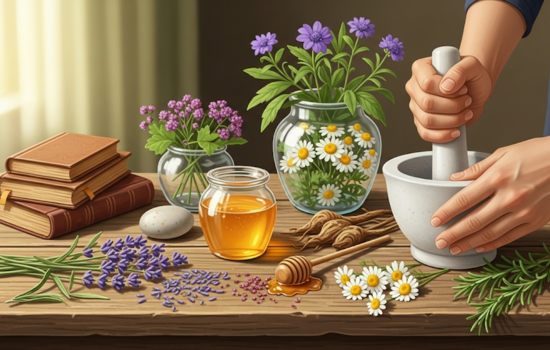
Start today: simple routine for risk-free learning
Define a mini-habit: one plant per day, two well-taken photos and five minutes of reading. In a week, your eye will distinguish jagged margins, veins and dispositions that you didn't see before. Save observations by zone (yard, park, sidewalk) and label season and sun exposure.
On your next walk, open the camera, capture and compare. If something doesn't add up, repeat the photo in better light or add the underside of the leaf. With each record, your guide to medicinal plants will grow. And if you want to move forward in an orderly and safe way, install PlantNetwill show you useful matches and alerts just when you need them. If you are motivated to learn by playing, try Seek and challenge your friends to identify natives of your neighborhood.