Advertisements
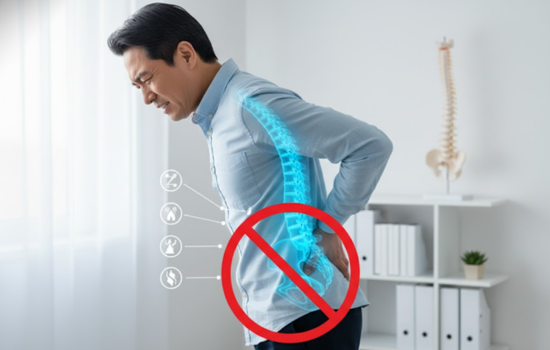
Is your lower back aching, stiff and can't seem to give you a break? Low back pain is one of the most common discomforts in adults, whether you work sitting all day, lift weights or sleep in knots. The reality is that the lower back supports load, posture, stress and movement... and when it protests, it slows everything down.
Spending hours sitting, using poor bending technique, sleeping in awkward positions or sitting still for long periods of time causes the muscles in the lower back to overload. The good news: in many common cases, it's not just sitting still that helps the most. move better, smoother and more often.
Advertisements
In this guide you will see a simple routine to relieve low back tension, why prolonged absolute rest usually worsens the problem, how to move during the day without aggravating the pain and which daily habits make a difference in the long term.
Important warning: this content is not a substitute for professional evaluation. If the pain is severe, appears with tingling or numbness in the legs, comes with weakness, or accompanies changes in bladder or bowel control, seek urgent medical help.
Advertisements
Take care of your lower back without overspending
Many people think that "fixing the back" means stopping moving or paying for expensive sessions. But in most cases of mechanical low back pain, what works best is to gradual movement, gentle core activation (abdomen + pelvic area) and small postural changes during the day. Standing still for too long tends to stiffen the muscles further and increase discomfort.
The trick is in microhabits: getting up from your chair every so often, stretching your hips, activating your glutes and abdomen. These repeated gestures unload the work that always ends up falling on the lower back. It's not a matter of "back strength", but of teaching the body to distribute that strength.
Benefits (quick view)
| Benefit | Why it helps |
|---|---|
| Less rigidity | The smooth movement avoids that lumbar blockage sensation. |
| More muscle support | Active buttocks and abdomen support the spine and relieve the direct load. |
| Faster recovery | Keep moving (without overdoing it) accelerates the return to a normal routine. |
The first real breakthrough is not to "get perfect in a day", but to start to give you intelligent mobility to the lower back and teach the body safer postures for carrying, bending and sitting.
Low back pain is no longer "just for old people".
Today, everyone's lower back hurts: people who spend long hours in front of the computer, delivery people, warehouse workers, parents who carry children, people who train with poor technique... even those who hardly move at all. It has become so common that it is now part of the conversation on daily body care.
And here comes the important part: "I'm in pain → I'll stay in bed all day" is almost never a good strategy. Spending more than one or two days completely still is usually weaken the muscles that stabilize the lumbar region and lengthen the pain episode. In most typical cases, moving gently brings better results than slowing everything down.
Breaking common excuses
I don't have time. You don't need an hour straight in the gym. Breaks of 2-3 minutes during the day already help.
I am afraid to move. Fear reinforces tension. Controlled movement teaches the body that moving ≠ harm.
I have no budget. Basic mobility on the floor, moderate local heat and posture changes are accessible resources.
I work sitting down all day. Rather than looking for the "perfect chair", the key is to not to stay the same for hours. Get up and change position.
When movement stops being "back punishment" and becomes a natural part of your day, the body lets down its guard and pain tends to go down as well.
Why thousands of people are adopting simple lower back routines
Those who have already incorporated small mobility and lumbar activation breaks usually always mention the same thing:
- It's simple. Basic movements: gentle knee swings, pelvic tilts, gluteal bridges, deep breathing.
- Fits into the routine. These are short blocks that you repeat two or three times a day, always at the same times.
- No equipment is required. You can do it at home, on a mat, even in bed at first.
- It corrects you without you even realizing it. By loosening tension and activating glutes/abdomen, you begin to sit differently, squat differently and lift more using your legs than your lower back.
When you strengthen the core (abdominal area, buttocks, stabilizing muscles), the back stops loading alone. Exercises like the glute bridge, modified planks or pushing the knee against the hand to activate the abdomen help support the spine and hips. Basic things like tying shoelaces, lifting a box, turning in the car stop feeling like a threat.
Daily routine to relieve lower back pain (step by step)
This mini-routine is intended to be repeated several times a day, always within a comfortable range. The objective is to release tension, enable support and maintain mobilitydo not force.
- Kneeling balance lying down. Lie on your back with knees bent. Drop both knees slowly to one side, return to center, then to the other side. Loosen hips and lower back without impact.
- Pelvic tilt. Face up, knees bent. Gently tighten your abdomen and press your lower back against the floor for about 5 seconds. Release. Repeat several times.
- Gluteal bridge. From the same position, raise your hips to align your knees, hips and shoulders. Hold for a couple of deep breaths and lower slowly. Activate glutes and stabilize the pelvis.
- Active standing pause. Every few minutes, stand up, walk around for a minute or two and change your posture. Keeping your body moving smoothly speeds up recovery more than freezing.
| Passed | What you do |
|---|---|
| 1 | Knee balancing while lying down to free the lower back and hips |
| 2 | Pelvic tilt by activating the soft abdomen |
| 3 | Gluteal bridge for gluteal awakening and lumbar support |
| 4 | Active pause: stand up, walk and change posture. |
Tips for use
- Better several times a day than once at the end. Small, steady doses win.
- Don't cross the line into acute pain. It should feel like gentle work, not sharp stabbing. If it hurts too much, reduce the range.
- Breathe. Don't hold your breath. Breathing deeply helps the muscles come out of "defense" mode.
- Take care of your sleeping position. Face up: a pillow under the knees relieves the lower back. Sideways: a pillow between the knees aligns the hips.
How to maintain improvement and not return to constant pain
Once the lower back starts to loosen up, you can add simple variations to keep progressing without overloading:
- Gentle localized heat. Applying moderate heat 10-15 minutes before moving can relax stiff muscles.
- Progressive core. Kneeling planks, modified dead bug or isometric abdominal presses (pushing your hand with your knee) strengthen without impact.
- Hip and hamstring mobility. Gentle stretching of the hip flexors and the back of the legs relieves tension that often ends in the lower back.
- Active postural hygiene. Alternate sitting, standing and moving. When lifting, glue the load to the body and use your legs instead of bending at the waist.
Remember: the goal is not to "punish your back to make it better", but to teach it to move safely every day. Gentle consistency always wins over sporadic overexertion.
Conclusion: start recovering your back today
He low back pain does not have to run your life. In most common cases, a combination of gentle movement, core activation, active breaks and improved postural habits reduces discomfort and accelerates the return to normalcy.
Start today with the basic routine. Get up more often. Take deep breaths. Lift using your legs. Support your back when you sleep. Notice what gives you relief and repeat. If you notice severe, rapidly worsening pain, tingling down the leg, or pain that affects bowel and bladder control, seek professional assistance immediately.
Legal Notice: This information is educational. It does not replace a personalized medical consultation or the advice of a professional. If your pain is severe, lasts more than a few weeks, worsens rapidly or comes with weakness, numbness or changes in the bladder or bowel, consult a specialist. Do not start, change or discontinue medication without health guidance.
Your back doesn't need perfection. It needs consistency.