Advertisements
Electricity bill discount for senior citizens in Brazil
Social energy tariff
Request your discount now
In Brazil, every month that the electricity bill feels like an endurance test for those living on pension or minimum wage alone.
For many people over 60, paying the electric bill means cutting back on food, medicine or transportation. The good news is that today there is something very concrete to alleviate that pressure: the exemption (or total discount) on the electric bill for low-income people over 60 years of age, through the Social Tariff for Electricity and new rules that expanded the benefit.
Advertisements
It is neither a "favor" nor a gift: it is a right provided for in federal regulations, linked to the Cadastro Único (Single CadÚnico) and, in many cases, to the Continuous Care Benefit (BPC). In practice, if you meet certain requirements, you may be able to have 100% discount on energy rate on a consumption tranche, which in real life translates into an electricity bill that is close to zero or very close to zero.
The problem is that many older people don't even know that they can access that exemption. They continue to pay the full bill every month because no one explained to them that, with a simple registration and some documents, they could drastically reduce that expense. That is why the issue is not only informative: it is urgent, because every bill that arrives without the benefit activated is money lost.
Advertisements
What is the exemption of the electric bill for seniors over 60?
The basis for everything is the Social Tariff for Electric Energy (TSEE)a federal program that grants discounts on electricity bills to low-income families enrolled in CadÚnico or who have someone at home who receives the BPC. Discounts were always linked to consumption: the lower the kWh per month, the higher the percentage reduction in the rate.
In 2025, a new regulation significantly expanded this benefit. Low-income families enrolled in the CadÚnico, including people over 60 years old and beneficiaries of the BPC, became entitled to free electricity consumption of up to 80 kWh per month. That means that if the house consumes within that limit and meets the criteria, the energy tariff is reduced to zero in that tranche. At many distributors, only charges such as street lighting or local taxes may appear on the bill, but not the energy itself.
In simple terms: for a small household, with few appliances and moderate use of light, this exemption can represent pay virtually nothing for electricity every month. And when every real one counts, that difference is felt in the pharmacy, in the marketplace and in the daily life of anyone over 60.
Who can take advantage of this benefit in Brazil
Although popularly referred to as "free light for seniors," the exemption is not automatic for anyone in their 60s. There are clear rules that combine age, income, social register and monthly consumption. In general, they enter into the profit:
- People over 60 years of age who are part of a family registered in the CadÚnicowith per capita income of up to half the minimum wage and monthly consumption of up to 80 kWh.
- Idosos (in the BPC legislation, 65 years and older) who receive the Continuous Care Benefit (BPC) and are linked to the Social Tariff; in these cases, the gratuity of the first 80 kWh is guaranteed by the new rule.
To visualize better, think of a simple table like this one:
| Profile of the family / person | Main requirements | Benefit in the electric bill |
|---|---|---|
| Over 60 years of age in low-income family | Registered in CadÚnico, income per person ≤ ½ minimum wage, consumption ≤ 80 kWh/month. | 100% discount on energy tariff up to 80 kWh |
| Idoso receiving GCP (normally 65+ according to LOAS) | Beneficiary of the BPC, included in the Social Tariff | Free of charge on the first 80 kWh/month of consumption |
| Low-income indigenous or quilombola family | Registered in CadÚnico or BPC, consumption within limit | Full exemption or extended discounts according to the standard |
Age opens the door, but it is not enough to have a birthdayYou have to be formally registered in the social programs and keep your data updated. This is where many seniors are unknowingly left out.
How the exemption works in practice on your invoice
On the energy bill, the exemption is usually shown as a large discount on the consumption rate up to 80 kWh. If the family consumes only that amount or less, the "energy" part comes with zero value, and only small taxes may appear, such as public lighting contribution or state taxes, depending on local legislation.
If consumption exceeds 80 kWh, the general rule is as follows: the first 80 kWh remain fully discounted, and the excess is charged at the normal rate. In real life, this means that a low-income 60+ year-old can reduce your electricity bill significantly if you watch your consumptionThe energy savings can be achieved by turning off unused appliances, changing lamps for economical models and avoiding wasting energy with very old equipment.
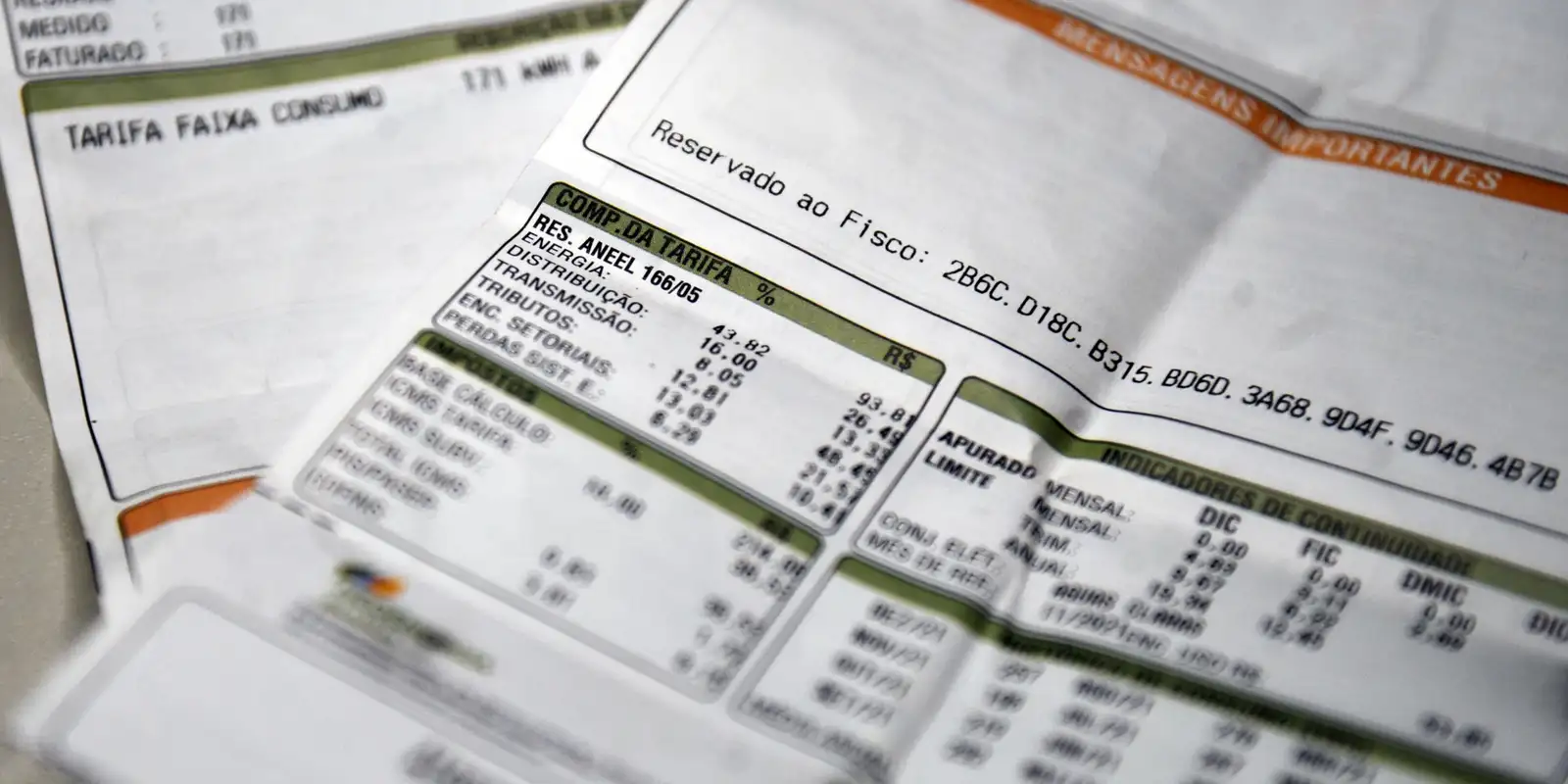
At some distributors, the invoice shows the word "Baixa Renda" or an indication of Social Tariff next to the consumption type. If this text appears, it is a sign that the benefit is active. If the person meets the requirements and still pays the full amount, it is an alert to check if the registration is correct or if there is any missing paperwork with the energy company.
Step by step for seniors over 60: from registration to discount
The way to achieve the exemption from the electric bill for seniors over 60 years of age The social area (CadÚnico, BPC) and the energy distributor. It is not a complicated process, but it requires organization.
First, the family must be registered and up to date in the Single Registry for Social Programs (CadÚnico). This is done in the CRAS (Centro de Referência de Assistência Social) or at points of assistance designated by the prefecture. There, the family composition, income, address and other data proving the low-income situation are reported. This registration is the basis for almost all social benefits.
In the case of the person receiving the BPCThe benefit itself already serves as a gateway: the legislation determined that BPC beneficiaries should be automatically included in the Social Tariff. Even so, it is important to verify if the distributor has correctly applied the benefit in the installation where the beneficiary lives. Companies such as EDP, Enel and others suggest that the invoice holder or a family member go with documents such as CPF, RG, benefit number and installation number to link everything to the Social Tariff registration when necessary.
After activation, the person over 60 years of age does not need to request the exemption all the time: the discount is applied month by month as long as the CadÚnico is updated and the income and consumption criteria are maintained.
Why it is urgent to activate the benefit and not leave it for later
Inflation in food, medicines and services hits hardest those who depend on a pension or minimum wage. In this context, continuing to pay the full electricity bill when you are entitled to an exemption is the same as leaving money on the table every month. Each bill without the Social Tariff activated is less food in the pantry or less medicine in the pharmacy.
For a household where a person lives with over 60 years old and low income, the exemption of up to 80 kWh can represent significant savings throughout the year. It's not just about numbers; it's about peace of mind. Knowing that the power won't be shut off for non-payment, that the refrigerator will continue to work and that there will be resources for other priorities alleviates a huge part of the emotional burden many seniors feel when they see the bill arrive.
To leave the registration for "later" is to risk continuing to overpay indefinitely. And since the updating of data in CadÚnico must be done periodically, the sooner everything is organized, the easier it will be to maintain the benefit without interruptions.
Attention to the blows: free light yes, intermediaries no
Every time a news item appears about free light for seniors over 60 years oldIn some cases, there are also people trying to take advantage of them. Some offer to "speed up the process" in exchange for money; others ask for photos of documents, copies of the invoice or even bank details with the excuse of registering the idoso. None of these intermediaries is necessary.
The official bodies themselves recall that you do not have to pay anyone to apply for or activate the Social Tariff. nor to register with the BPC. The correct path always goes through the CRAS, through the INSS channels or through the energy distributor, never through a "consultant" who charges commissions on the outside.
The urgency to lower the electric bill can make an elderly person believe any promise that sounds convincing. That is why it is important that relatives and trusted friends help to verify information and accompany the elderly person in the procedures when necessary. The exemption exists, it is real, but it is only guaranteed by following the official channels.
Using the light exemption as part of a life plan
The isenção de contas de eletricidade for the over-60s in Brazil is not just a one-off relief: it can be the first step in reorganizing the family's entire financial life. When an expense as basic as electricity is reduced or eliminated, there is room in the budget that can be used for other emergencies or even for small improvements in the quality of life.
A senior who knows that electricity is guaranteed can buy medication with more peace of mind, make a small market without fear of being cut off, or even invest in changes that reduce consumption even more, such as LED lamps or more efficient refrigerators. The exemption can also help children and grandchildren living in the same house breathe a little easier.
The important thing to understand is that this benefit does not come on its own. It is necessary to be informed, to sign up and, sometimes, to insist until you see the right word on the bill. But once it appears, every month that passes with the Social Tariff and active exemption is a month in which age ceases to be just a concern and also becomes a concrete right to live with a little more dignity.