Advertisements
It's happened to many of us: changing our oil late, forgetting a filter, or paying unnecessary "extras." It's not a lack of interest; it's just disorganized. The good news: today you can set a calendar and create clarity with apps that remind you of, record, and display expenses without becoming a mechanic.
A good professional is still key, but you no longer walk into the workshop blind. With your phone as a living notebook of dates, mileage, spare parts brands, and photos of invoices, consultations become faster, more transparent, and often cheaper.
Advertisements
These tools don't promise miracles. They offer consistency: alerts that arrive on time, reports that lower the "I think" to real numbers, and a history that speaks for your car when you want to sell it. Feeling like you're "on track" reduces stress and also reduces your bill.
If you drive daily, prevention costs less than repair. Here we talk, in clear and direct Spanish, about how to use digital checklist and OBD2 to make decisions calmly, avoid unnecessary expenses, and leave the workshop feeling like a service has been well done.
Advertisements
See also
- Vitality Tea: A cup that wakes you up without overwhelming you
- Tea for constipation
- Tea to reduce joint pain
- Elixir of Vitality: A Simple Way to Recover Your Energy
- Elixir of Vitality: Restore your energy with small decisions
Why a digital checklist is a game changer
Memory fails and paper is lost. digital checklist Organize your car like a simple project: each service is linked to the date and mileage, with notes and photos of what was changed and why. When the "1,000 km to oil" warning pops up, you arrive with an appointment, without rushing things that open the door to unnecessary "packages." Plus, the plodding costs that drain your budget surface: pointless additives, weekly premium washes, duplicate calibrations. With a clean record, you can see patterns and stop leaks without drama.
If more than one person uses the vehicle, anyone can immediately note a new noise, a vibration over bumps, or a warning light that has come on and gone off. This clue, combined with the date and route, guides the technician and prevents "just-in-case changes." And when selling, the history is valuable: photos of invoices, filter brands, and clear dates inspire confidence and maintain the price. The checklist doesn't replace complex diagnostics; it prepares you to authorize what's appropriate and calmly say "no" to the rest.
How they really work: Logging, reminders, and reports that actually work
You don't need an infinite spreadsheet, but rather three simple layers that work together. Record It's your logbook: fuel, services, tires, battery, brakes, air filter, A/C cleaning, alignment and balancing. Write down brand and price The replacement avoids future arguments; when it's time to repeat, you compare and decide with data.
The reminders They are triggered by time or by kilometers: 10,000 km for oil, a semi-annual visual inspection, a brake inspection before vacation. That friendly little bell is worth more than any generic advice because it finds you at the right time. reports They show consumption, monthly spending, and projections; viewing trends helps you organize your mind and plan your cash flow.
What can't you ask of the app? Miracles. It doesn't predict noises or legitimize "shortcuts" with out-of-spec fluids. The algorithm guides, but the manufacturer's manual rules. Don't use it to extend intervals "because nothing ever happened"—until it does. The benefit lies in consolidating visits (multiple services in one stop), ordering parts in advance, and providing the shop with a summary that turns the "we'll see" into clear tasks, deadlines, and values.
OBD2 without the hassle: what's useful on your phone (and what isn't)
In addition to the checklist, an adapter OBD2 Bluetooth or Wi-Fi on the car port and a diagnostic app on your cell phone allow you to read fault codes and view sensors in real time. You don't need to be a technician to benefit: engine temperature, battery voltage, manifold pressure, mixture, or catalytic converter status help separate scares from real problems. If the check engine light comes on, you can freeze the data, note the code, and arrive at the shop with a concrete clue, not just a "thought it was me." After the service, confirming that the code hasn't returned gives you peace of mind: they fixed the cause, not just turned off the light.
There are clear limits. Not all models display the same parameters, and some data is proprietary. "Clearing code" is not a repair: if it returns, a professional diagnosis is required. Safety first: no looking at graphics while driving; test while stopped or with a co-pilot. Regarding hardware, avoid generic adapters of dubious quality that generate interference. The right app translates acronyms, explains them in simple language, and allows you to export a report to send it to your mechanic: a minute of organization that translates into less exploratory labor.
From data to decisions: Negotiate without anxiety and pay what is fair
With up-to-date records and, if you want, an OBD2 scan, you can replace "I don't know" with "this is what it is." When you request a quote, you arrive with a mini-sheet: date of last service, oil used, filter brand, current mileage, symptoms observed, and, if applicable, codes read. A reputable workshop appreciates informed customers and tends to be precise; one who improvises betrays themselves with vagueness. With the app's numbers, you can compare parts prices between visits, detect unusual price increases, and you plan what's coming: tires that will go on for 8,000 km, a battery that has already passed its critical age, belts that should be checked before a trip.
If the car is under warranty, registration helps you meet warranty intervals and keep records. If it's used, this history justifies your resale price and speeds up the buyer's decision. The real savings aren't "paying less today," it's do not pile up damageWorn pads that mark the discs, a clogged filter that increases fuel consumption, a belt that, if broken, multiplies the damage. Seasonality also plays a role: checking the coolant before the heat, replacing the wiper blades during the rainy season, calibrating for trips. With a foundation and peace of mind, you leave the shop with a service that makes sense for your wallet and on the road.
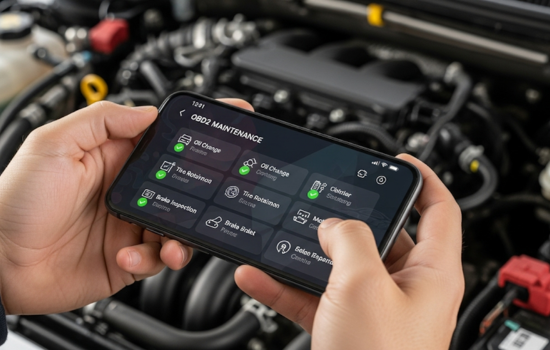
Caring for your car doesn't have to be a puzzle. With a digital checklist and, if you like, an OBD2 reader, you can go from "hopefully nothing happens" to "I know what's due and when." This will be reflected in your wallet, in the quality of service, and even in resale value. If this conversation has you thinking, keep browsing the site: you'll find content to help you choose services wisely and make maintenance a predictable habit. Your car and your budget will thank you for it.
Download the recommended App